
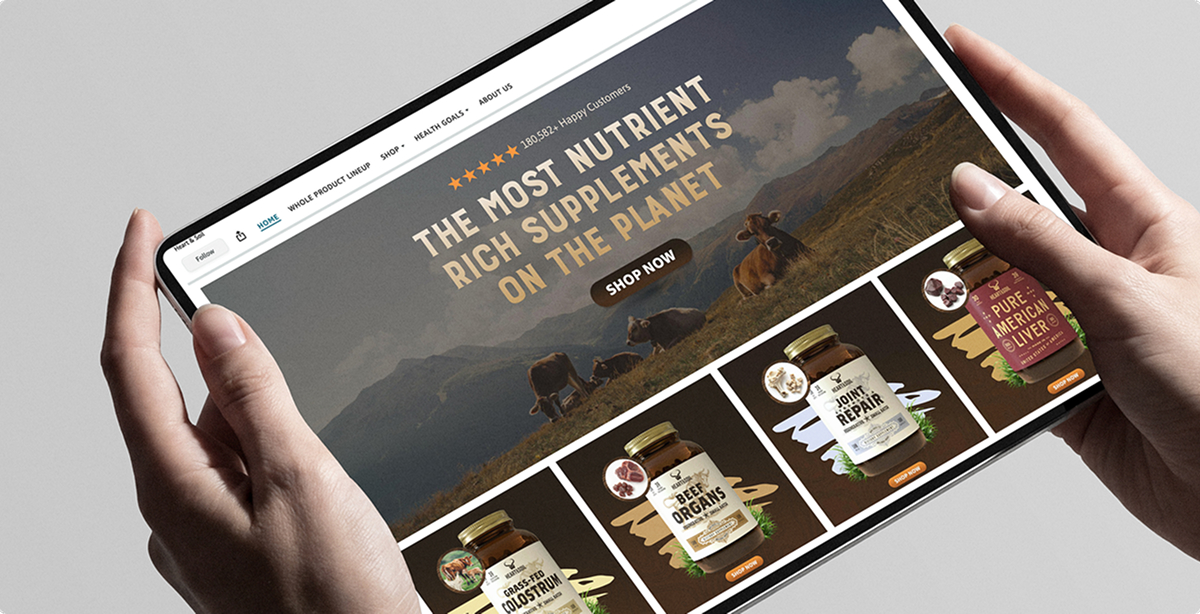
If your Amazon A+ Content has been live for a while, you may be wondering whether it's time for an update. Perhaps your brand has evolved, you've introduced new product features, or you've noticed competitors taking a different approach to their product storytelling. These changes can be good reasons to revisit your content, even if there isn't an obvious performance problem.
The question is how extensive those updates need to be. In some cases, refining a few modules can make the content more useful and relevant. In others, rethinking the overall design and messaging may create more opportunities to communicate your product's value.
Neither option is inherently better. The most useful starting point is understanding what your current A+ Content does well, where it may be falling short, and what you want to accomplish next.
Why Revisit Your Amazon A+ Content?
Amazon A+ Content gives eligible brands additional ways to explain their products through enhanced imagery, comparison charts, and branded storytelling. These modules can help shoppers understand product features, explore potential use cases, and compare options before making a purchase. A+ listings also provide an opportunity to communicate information that may be difficult to cover in a product title or bullet points alone.
As products and brands evolve, the information customers need may change as well. A feature that was once a major differentiator might become standard across the category, or customer reviews might reveal questions your original content doesn't fully address. Revisiting A+ Content periodically can help you identify whether the information and presentation still reflect how customers evaluate your products.
That doesn't necessarily mean older content needs replacing. Some A+ Content continues to communicate effectively for years, while other assets benefit from more frequent adjustments. The goal of an evaluation is to understand whether changes would add meaningful value rather than updating content simply because it has been live for a certain amount of time.
What Does an A+ Content Refresh Involve?
An A+ Content refresh on Amazon typically involves updating selected elements while keeping much of the existing structure intact. This might include replacing outdated photography, revising product benefit statements, improving text readability, or incorporating new product information. The extent of a refresh can vary depending on which elements need attention.
For example, a skincare brand might have A+ Content that already explains its product benefits clearly but doesn't reflect updated packaging or newly emphasized ingredients. Updating those visuals and descriptions could improve accuracy without requiring an entirely new listing design. In this situation, preserving the existing structure may be a practical way to build on what's already working.
When Might a Refresh Be Worth Considering?
A refresh may be worth exploring when your existing content generally supports your brand positioning and communicates the product clearly. If the main opportunities involve specific details, such as imagery, product specifications, or messaging clarity, targeted updates could address those needs. This approach can also make sense when you want to test improvements before committing to a larger creative project.
Budget and production timelines may influence the decision. Working with existing design assets can sometimes reduce the time and resources required to make changes. Still, it's worth reviewing the overall content experience first, since a smaller project isn't necessarily the most efficient option if multiple modules have deeper issues.
What Does a Full A+ Content Redesign Involve?
A full A+ Content redesign takes a broader look at how the product's story is communicated across the Amazon listing. Rather than starting with individual assets, the process considers which information matters most to shoppers, how that information should be organized, and whether the visual direction supports the brand's current positioning. The resulting changes may include new layouts, photography, copy, and comparison modules.
Consider a home goods brand that has gradually shifted toward a more premium audience. Its existing content might focus heavily on affordability, while its current customers are more interested in materials, durability, and design details. A broader redesign could provide room to rethink which benefits receive emphasis and how those benefits are demonstrated.
A redesign doesn't have to mean abandoning every existing element. Strong photography, useful explanations, or effective comparison modules may still have a place in the updated content. The difference is that those assets are evaluated as part of a larger storytelling strategy rather than automatically preserved.
When Might a Redesign Be Worth Exploring?
A redesign may be useful when several parts of the existing Amazon listing no longer align with the product or brand. Changes in target audience, product positioning, or visual identity can create a need to reconsider the overall presentation. Similarly, content that feels difficult to navigate or doesn't clearly explain important product differences may benefit from a more comprehensive review.
Mobile readability is another consideration. If important details are difficult to read on smaller screens, it may be worth examining how the modules are designed and organized. Depending on the extent of the issue, the solution could be a few adjustments or a broader restructuring.
A+ Content Refresh vs. Redesign: What Changes?
The distinction between a refresh and a redesign isn't always a strict one. Projects can fall somewhere between the two, particularly when some modules need only minor updates while others require more substantial changes. These differences can help frame the conversation:
- Scope: A refresh generally focuses on selected modules or content elements, while a redesign looks more broadly at the page's structure and storytelling.
- Visual assets: Refreshes often reuse existing photography and graphics. Redesigns may involve developing new assets, although useful existing visuals can still be retained.
- Messaging: A refresh may clarify or update current copy, while a redesign offers an opportunity to reconsider the order and emphasis of product benefits.
- Timeline: A refresh can be quicker when suitable assets already exist. A redesign may take longer because of additional planning, production, and review.
- Investment: A refresh often requires fewer resources, but the actual cost of either approach depends on the number of modules, creative requirements, and complexity of the changes.
These aren't rigid categories, and a hybrid approach may be appropriate for some brands. For example, you might retain a strong comparison section while redesigning the modules that introduce your product's main benefits. What matters is choosing a scope that reflects the work your content actually needs.
How to Evaluate Your Next Step
1. Look at Performance in Context
Amazon Seller Central can provide useful starting points through metrics such as sessions, unit session percentage, and sales trends. If conversion performance has changed, it's worth investigating what else may have shifted during the same period. Pricing, advertising traffic, reviews, inventory availability, and competitor activity can all influence results, so performance data alone won't tell you whether A+ Content needs attention.
2. Review the Content From a Shopper's Perspective
Consider what someone unfamiliar with your product would understand after viewing the A+ Content. Are the most relevant benefits easy to identify, and do the visuals help explain them? Looking at the experience on both desktop and mobile can reveal opportunities that aren't immediately obvious when reviewing design files.
3. Use Customer Feedback as a Guide
Reviews, customer questions, and recurring product concerns can offer clues about what shoppers want to know. If customers frequently ask about sizing, ingredients, compatibility, or product usage, consider whether your content addresses those topics clearly. Sometimes a small addition can resolve a common question, while other feedback may suggest that the information needs to be presented differently.
4. Consider Your Broader Brand Plans
The right scope may also depend on what comes next for your business. If you're preparing for a brand repositioning, launching related products, or developing a more consistent Amazon presence, a broader design project may support those plans. If your focus is improving a handful of established listings, smaller updates may be a reasonable place to start.
How Can You Track Results?
Before publishing updated A+ Content, consider documenting your current listing performance so you have a reference point. Reviewing conversion and sales trends afterward may help you understand how the listing is performing, although other changes in the marketplace can affect those numbers. Comparing similar periods and noting changes to pricing, advertising, or promotions can provide helpful context.
Eligible brands may also be able to use Amazon's Manage Your Experiments tool to compare supported A+ Content variations. Testing can help answer specific creative questions, such as whether a different benefit presentation resonates more effectively with shoppers. While no individual test captures every factor influencing purchase decisions, it can provide useful evidence for future content decisions.
Final Thoughts: Start With What Your Content Needs
Deciding between an A+ Content refresh and a full redesign doesn't have to begin with choosing a project size. A more useful first step is reviewing your current content, identifying potential gaps in understanding, and considering which improvements would be most relevant to your customers. That process may point toward a targeted refresh, a broader redesign, or a combination of the two.
At Brightshift Labs, we approach Amazon creative with the understanding that different brands and products require different solutions. Our Amazon services focus on helping brands evaluate their existing content and identify opportunities to communicate product value more clearly. Whether that involves updating a few modules or exploring a new creative direction, the goal is to make informed decisions that support the brand's next stage of growth. Contact us for a free audit.


